

See Clearly without Reading Glasses

Dr Errol Chan, MBBS, MMed(Ophth), MRCS(Edin), FRCS(Edin), FRCOphth, FRCS(Glasg), FRCS(Canada), FAMS
Dr Errol Chan, MBBS, MMed, MRCS, FRCS, FRCOphth, FRCS, FRCS, FAMS

Dr Errol Chan is Medical Director & Senior Consultant Ophthalmologist at Ascend Eye Clinic in Singapore. Dr Chan has extensive experience in refractive and laser vision correction. Trained at leading international centres in Singapore, Canada and the UK, he performs the full spectrum of refractive procedures — including LASIK, SMILE, TransPRK, Implantable Collamer lenses (ICL) for individuals with myopia, hyperopia, and astigmatism. He also helps individuals with reading vision difficulties (presbyopia) achieve spectacle-independence with refractive surgery, adopting a customised approach to every patient. To date, Dr Chan has completed more than 10,000 eye surgical procedures in his professional career.

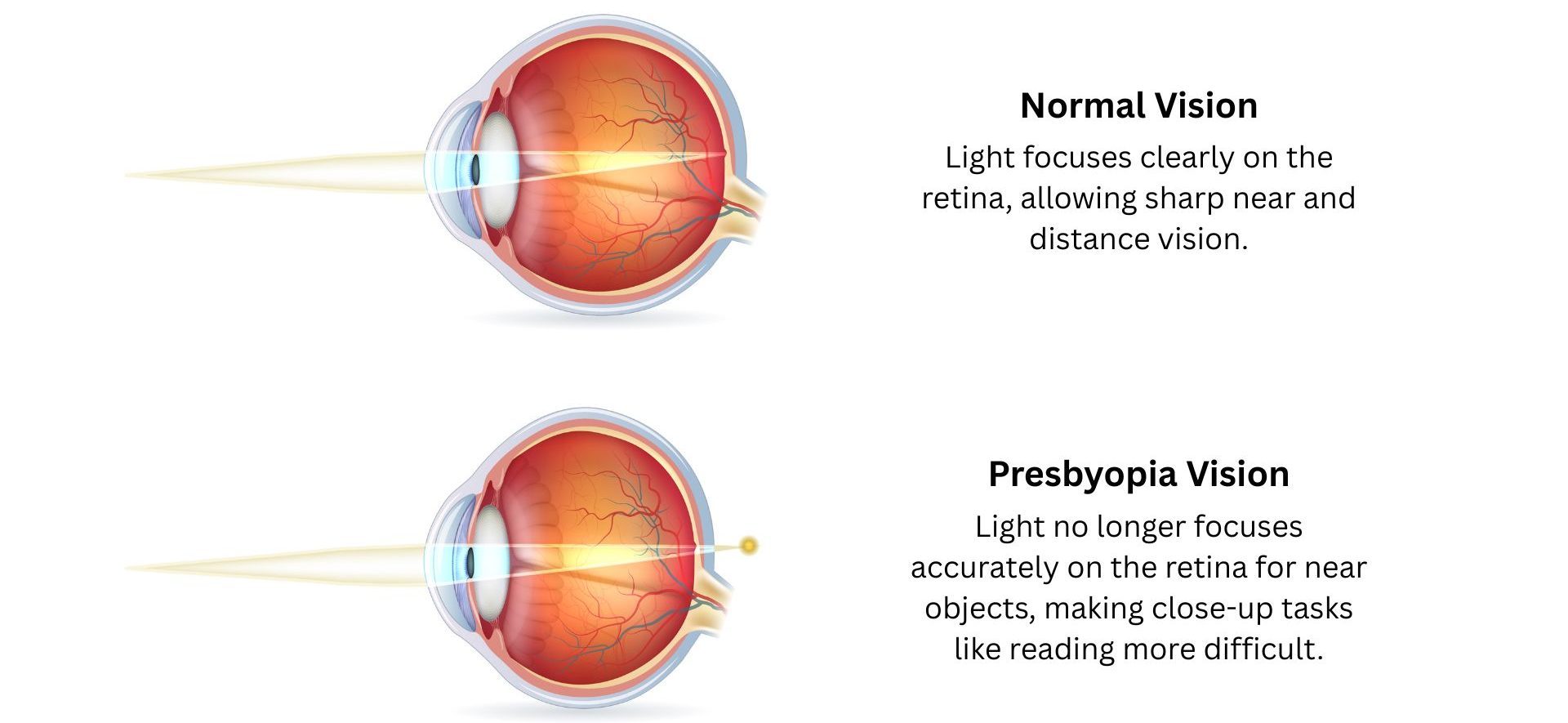
Do you find it harder to read your phone, books, or menus clearly up close? This is a common age-related issue known as presbyopia, or mata tua in Bahasa Indonesia. It affects nearly everyone over 40 as the natural lens of the eye becomes less flexible and the focusing muscles stiffer, making it harder to focus on near objects.

What is Presbyopia?

Presbyopia, or mata tua, is a natural, age-related condition that makes it difficult to focus on near objects. It usually begins in the early forties and progresses with age. People often notice the need for brighter light, reading glasses, or holding their phone further away.

This change happens because the eye’s natural lens hardens over time and can no longer adjust its focus for close distances. At the same time the tiny muscles that control near focusing on the eye stiffen with age. While this process is a normal part of aging, effective management can help maintain comfort and clarity in daily activities such as reading, phone use, computer work, as well as any social activities or hobbies requiring precise and clear near vision.

Who is at Risk?

Several factors can increase the likelihood of developing presbyopia or experiencing it earlier:

  • Age: Most people notice changes in near vision starting in their 40s, and tend to worsen with each passing year.
  • Occupation: Jobs that require frequent reading or screen use make symptoms more noticeable.
  • Lighting: Poor or dim lighting can increase visual strain for near vision tasks.
  • Other eye conditions: Issues such as hyperopia (farsightedness) or other refractive errors can make presbyopia appear earlier.

Because presbyopia develops gradually, early and accurate assessment helps you find the appropriate management before it significantly affects your day-to-day activities.

What are the Treatment Options?

There are several clinically-established treatments available for presbyopia, depending on the cause and your visual needs:

  1. Glasses or Contact Lenses
    Reading glasses are the simplest and most common solution. They magnify near objects, allowing you to focus more easily. Multifocal or progressive lenses can help you see at multiple distances without switching glasses. The disadvantage of using glasses or contact lenses is their inconvenience (especially with multiple pairs), and with contact lenses, infection risk and tolerability issues.
  2. Blended Vision with Refractive Procedures
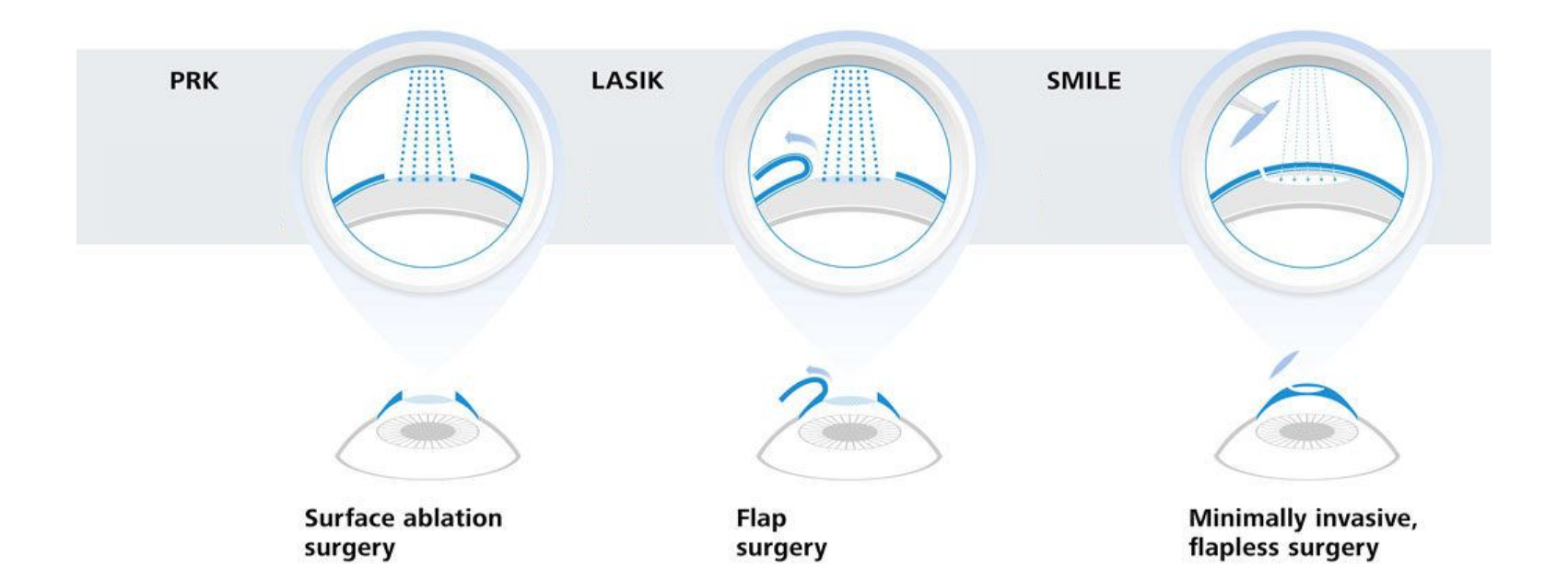
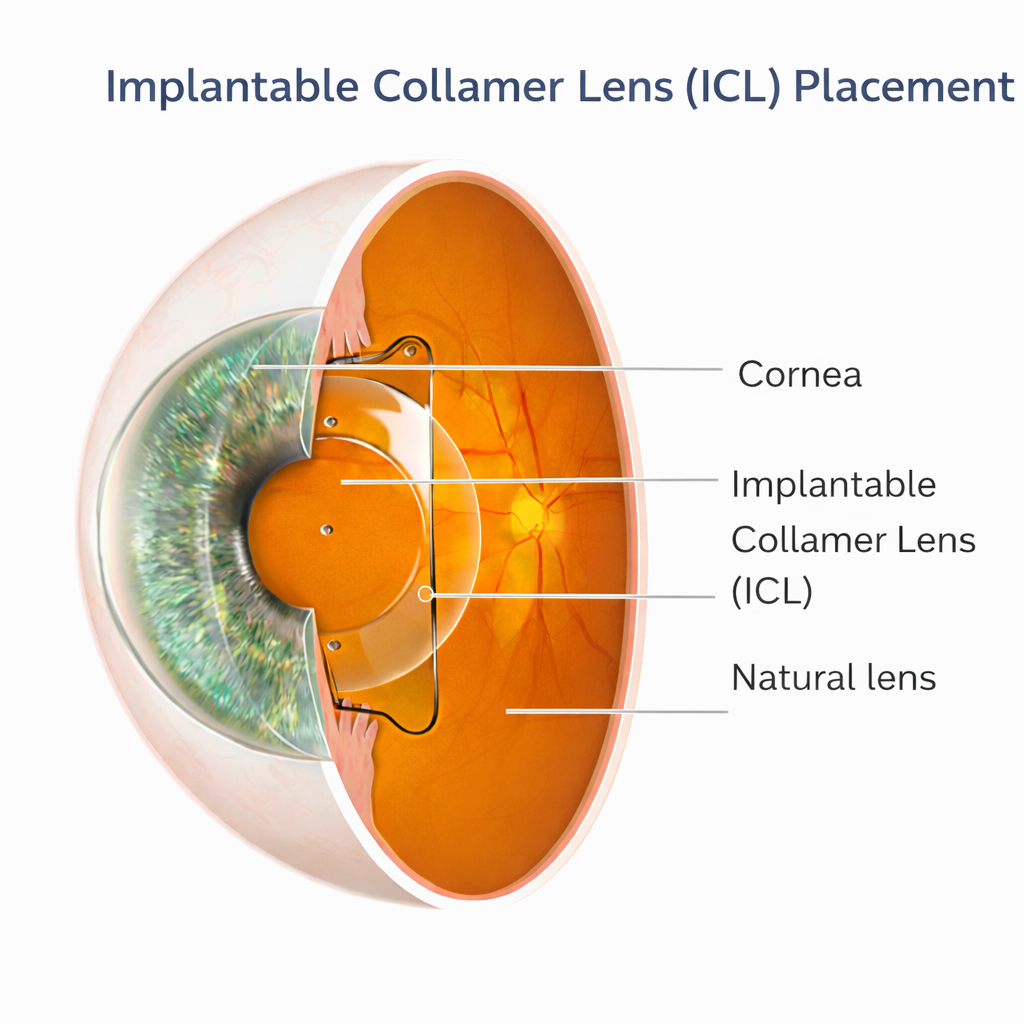
    Laser vision correction procedures (LASIK, transPRK, SMILE), or implantable collamer lens (ICL) are surgical options that allow for “blended vision” so that one eye is configured to see well for distance and the other eye to see well for near. These procedures alter the refractive power of the eye to correct both distance and near vision. The brain adapts to this “blended vision” between the two eyes, allowing the individual to be overall free from the need for both distance and reading glasses.
  3. Refractive Lens Exchange (RLE)
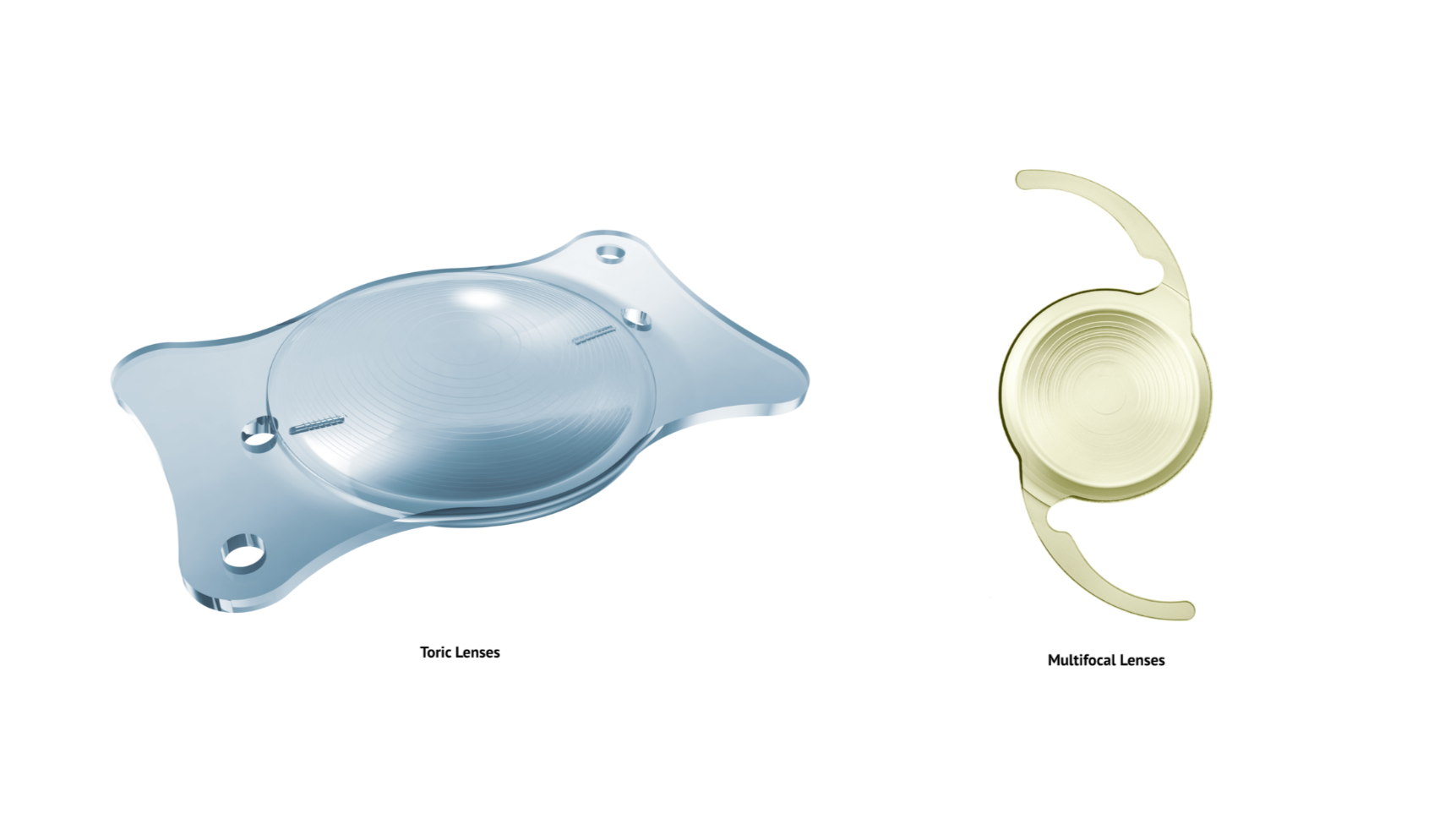
    An alternative to laser vision correction or ICL is a lens-based procedure known as Refractive Lens Exchange. In this procedure, the aging lens is removed and gently replaced with a premium artificial intraocular lens implant such as a multifocal or extended depth-of-focus lens implant. This procedure is typically completed within 15–20 minutes per eye and is performed in exactly the same manner as cataract surgery.
  4. Cataract Surgery
    Where there is significant lens clouding (i.e., a cataract) causing not only presbyopia but reduced visual clarity, cataract removal followed by premium intraocular lens placement with a multifocal or extended depth-of-focus implant is the standard of care. This is insurance claimable as a medical condition.

Lens Options for Presbyopia

If a lens-based procedure is recommended, several intraocular lens (IOL) implant options are available to match individual visual needs and lifestyle:

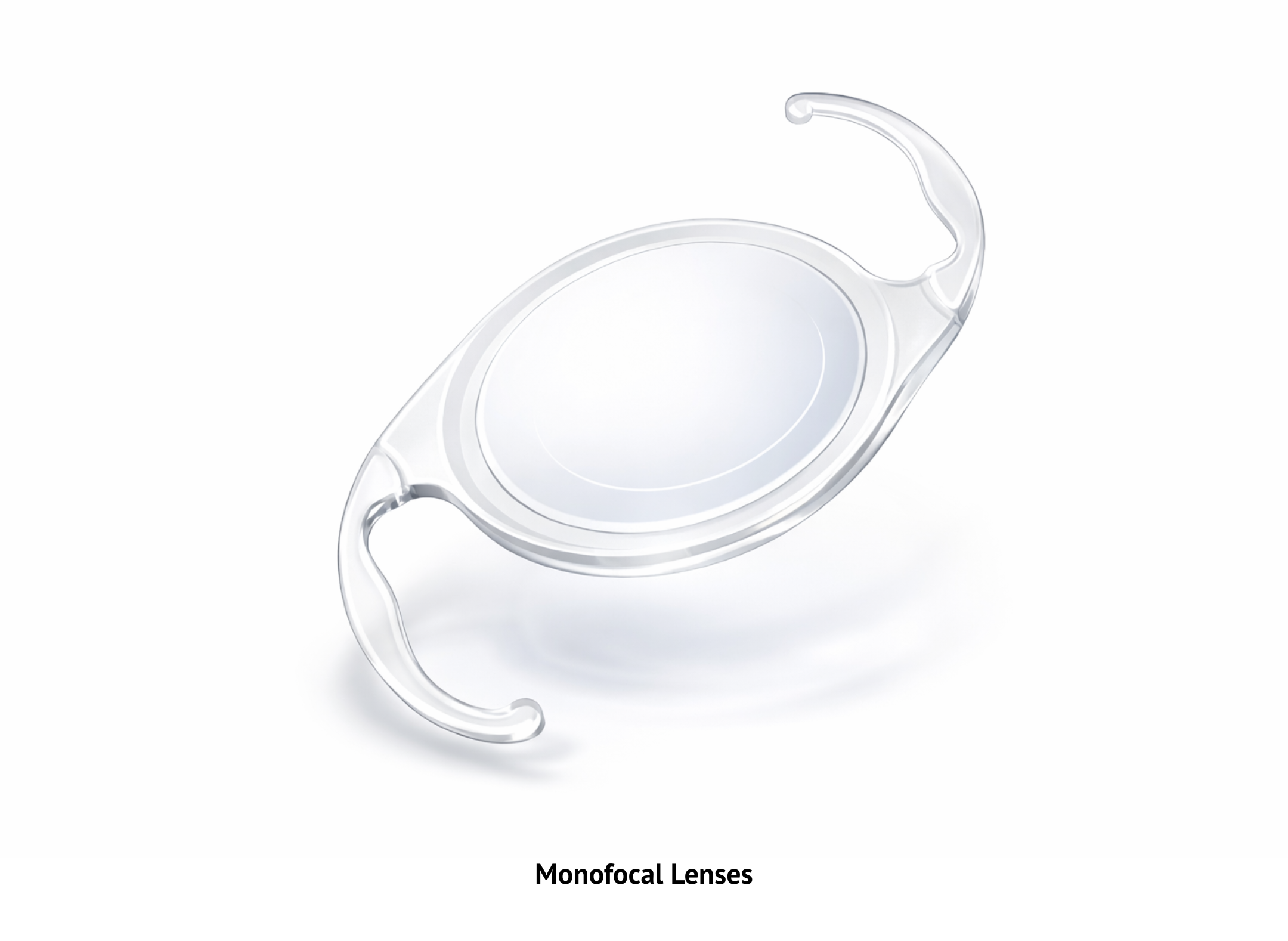
  • Premium Monofocal Lenses – These lenses have a broader focus range at a specific distance, and when configured with one eye adjusted for distance vision, and the other eye for near vision, will achieve “blended vision”, reducing reliance on spectacles.
  • Multifocal or Trifocal Lenses – These advanced lenses have multiple focusing zones built into one lens, allowing you to see clearly at near, intermediate, and far distances. This reduces the need for glasses for the majority of daily activities, such as reading, driving, or using digital devices.
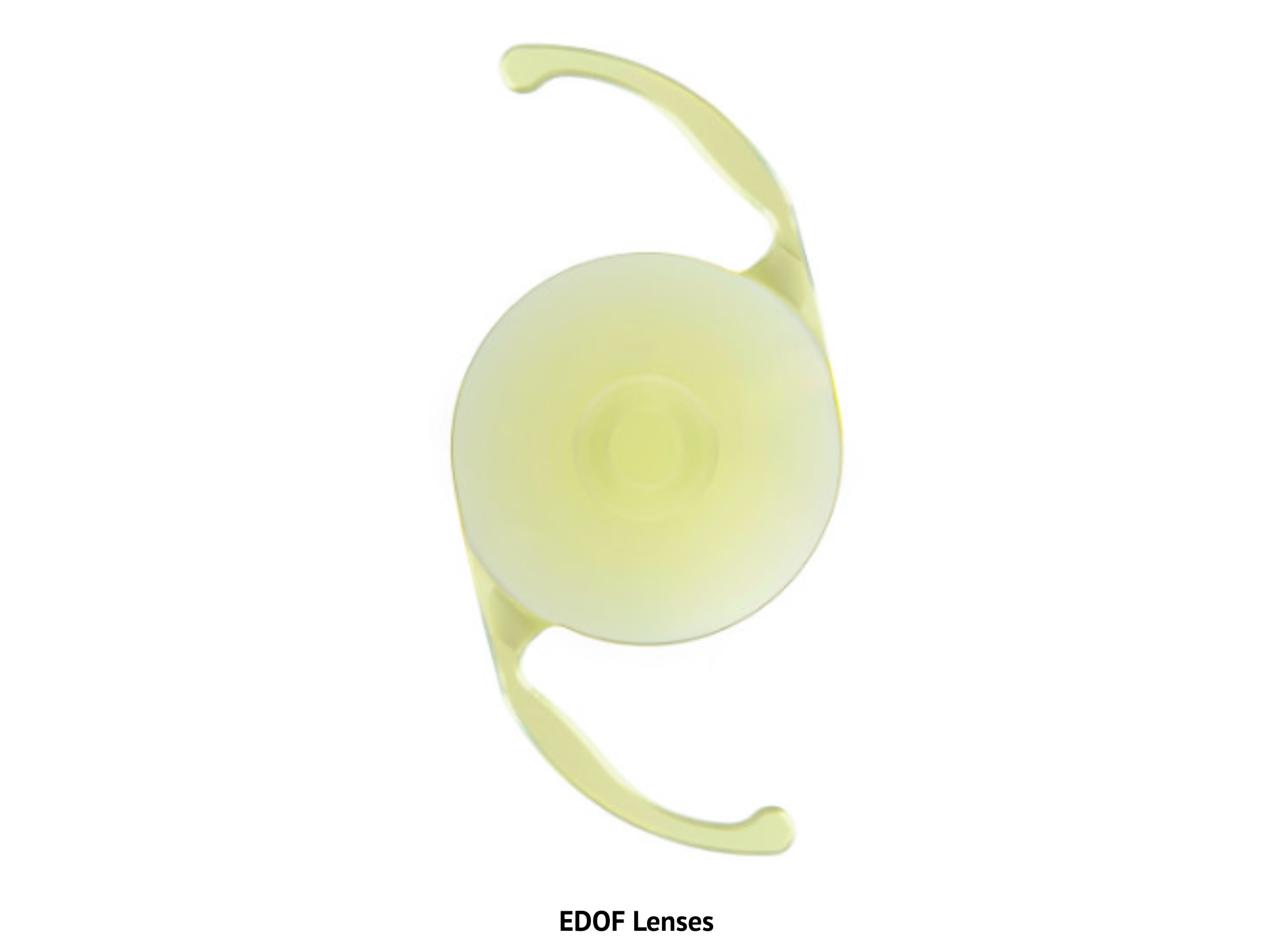
  • Extended Depth of Focus (EDOF) Lenses – EDOF may be offered for individuals who are not eligible for multifocal lenses (owing to intrinsic medical conditions in the eye). Although the overall range of vision is slightly less with EDOF lenses compared with multifocal lenses, EDOF lenses create a smooth transition from near to far distance vision, allowing comfortable focus for reading and computer use with fewer visual disturbances such as glare or halos at night.
Your treatment plan will be tailored based on your eye health, daily activities, and visual goals.


"Greater independence from reading glasses allows patients to stay engaged in work, hobbies, and everyday moments, supporting a more active, fulfilling lifestyle."

— Dr Errol Chan —
Medical Director & Senior Consultant Ophthalmologist Ascend Eye Clinic, Singapore

Blended Vision (Monovision Laser Refractive Surgery)

What is Blended Vision?
In simple terms: we treat your two eyes a little differently, one is adjusted mainly for distance (driving, watching TV) and the other mainly for near (reading, phone, close-up tasks). The difference is kept small so your brain can naturally “blend” both images together, giving you a smooth range of vision without constantly switching glasses. Over time, your brain learns to use both eyes together so you have a more continuous range of vision.

How does the treatment work?
This approach is achieved through refractive surgery such as LASIK, SMILE, or transPRK, where the corneal shape is precisely adjusted to suit each eye’s focusing role. After treatment, your brain gradually adapts to the new setup. This adjustment period is normal; most people notice steady improvement over a few weeks as their eyes and brain learn to work together comfortably.

Refractive Lens Exchange

What is Refractive Lens Exchange?
Refractive Lens Exchange is a lens-based procedure where the eye’s natural lens is gently removed and replaced with a clear artificial lens that helps you focus better on different distances. It works very similarly to cataract surgery, the difference is that Refractive Lens Exchange is done before a cataract forms, giving you clearer near and distance vision while addressing presbyopia at its source.

What makes Refractive Lens Exchange different from other treatments such as Blended Vision?
Unlike laser procedures that reshape the cornea, Refractive Lens Exchange directly replaces the aging lens, the part of the eye responsible for presbyopia. This means the focusing ability is restored more completely. Refractive lens exchange allows the individual to choose from a broad choice of advanced lens options, allowing a wide and customised range of clarity without glasses. This enables the treatment to be tailored to your daily activities, whether you prioritise reading comfort, night driving clarity, or a smooth range of vision. And because the artificial lens does not age and cannot develop cataracts, the visual results remain stable and long-lasting.

When Should You Consider Laser or Surgical Treatment for Reading Vision Difficulties?

Treatment can be considered when presbyopia or early lens changes affect the quality of vision in day-to-day activities. Treatment can be considered when:

  • Glasses or contacts are no longer comfortable
  • Blurry near vision affects your work or daily life
  • You often experience eye strain or headaches
  • You prefer a long-term solution for presbyopia

How Are These Procedures Performed?

Refractive Lens Exchange is performed using the same surgical technique as for cataract surgery. During cataract surgery, the cataractous lens is removed, whilst in Refractive Lens Exchange, the eye’s natural crystalline lens, which has not yet developed fully into a cataract, is removed. In both procedures, a premium lens implant such as a Premium Monofocal, EDOF, or Multifocal implant is placed in the eye, all with the necessary toric correction, if so required. In this way, Refractive Lens Exchange allows correction of both distance and near vision, reducing dependence on both distance and reading glasses.

This option may be considered for patients with presbyopia who already have early lens changes, or who may not be suitable for laser vision correction.

Find out more about Refractive Lens Exchange in our blog on Cataract Surgery with Premium Lens Implants.

Blended vision is a strategy used in laser vision correction (SMILE, LASIK and transPRK) or implantable collamer lens (ICL) surgery, where one eye is corrected for distance vision and the other for near vision. The brain adapts over time to blend the images, allowing clearer vision across different distances with reduced reliance on both distance and reading glasses.

Read more about Laser Vision Correction or Implantable Collamer Lens.

How is the Post-Treatment Care and Recovery?

After surgery, it’s common to experience mild dryness or slight blurriness for a few days as part of the normal healing process. Patients are usually prescribed eye drops and advised to attend follow-up visits to ensure proper recovery.

Most people notice clearer, more stable vision within a few weeks and can resume normal activities soon after the procedure.

LASIK Surgery Aftercare

Use this timeline as a quick guide to know what to do, and what to avoid, as your eyes heal.
FIRST 24 HOURS

Rest your eyes, limit screen time, avoid reading.

FIRST 24 HOURS

Wear eye shields at night to prevent accidental rubbing.

AFTER 24-48 HOURS

You can shower/wash hair, but avoid direct water into your eyes.

AFTER 48 HOURS

Resume driving or work once your vision feels stable.

AFTER 3 DAYS

Light exercise. Avoid gym workouts, heavy lifting or bending low.

AFTER 4 DAYS

You may use eye make-up, take care not to get irritation or infection.

1 WEEK

Fly home after your doctor clears you.

2 WEEKS

Avoid swimming & sauna.

About Dr Errol Chan

Dr Errol Chan is the Medical Director and Senior Consultant Ophthalmologist at Ascend Eye Clinic in Singapore. With more than 18 years of clinical and surgical experience and over 10,000 eye procedures performed, he provides comprehensive care for patients seeking treatment for a broad range of complex and routine eye conditions, including age-related vision changes such as presbyopia.

Dr Chan performs the full spectrum of refractive procedures, including laser vision correction through LASIK, transPRK, SMILE, implantable collamer lens (ICL), and refractive lens exchange with premium lens implants, to help patients achieve their visual and lifestyle goals.

Dr Chan received his medical degree (MBBS) from the National University of Singapore and completed Ophthalmology specialist training at the National University Hospital in Singapore. He has also achieved Ophthalmology specialist accreditations at the Royal Colleges in Edinburgh, Glasgow, London, and Canada, and the Academy of Medicine, Singapore.

Dr Chan received international fellowship training at the world-renowned McGill University in Canada, and at Moorfields Eye Hospital London in the UK. Additionally, he has furthered his interests in refractive surgery and premium lens implants at Optegra Eye Hospital London, UK.

He is an international speaker, has published more than 40 articles in international peer-reviewed journals, won several international awards, and is an active clinical investigator in clinical trials investigating new treatments for eye diseases.

In his clinical practice, Dr Chan focuses on precision, efficacy, safety, and patient-centred care, adopting a detailed approach from the very first consultation, during surgery, and in follow-up care. Understanding that seeking treatment can be stressful, he affords sufficient time for every patient to understand their aspirations for their vision and their preferences regarding treatment.

Dr Chan regularly treats international patients, including those from Indonesia, who seek evaluation and treatment for reading vision problems in Singapore. A large number of his patients seek treatments to be free from both distance and reading glasses. Consultations and treatment options are clearly explained, with Bahasa Indonesia support available to help patients understand suitability, expectations, and long-term visual planning.

Frequently Asked Questions (FAQs)

1. What are the early signs of presbyopia?

You may find it difficult to read small print, need brighter light, or hold your phone farther away.

Procedures such as Refractive Lens Exchange (RLE) can address both near and distance vision problems while reducing dependence on glasses.

Monovision is a technique where one eye is corrected mainly for distance and the other for near tasks. Your brain learns to combine both, allowing a wider range of vision with less dependence on reading glasses.

Some people notice mild imbalance at first, but most adapt within a few weeks. The difference between both eyes is kept small to maintain comfortable depth perception for daily activities.

Suitability depends on eye health and visual needs. Dr Chan will assess this and may simulate Monovision before treatment.

Most patients notice improving vision within days, with more stable results over the following weeks depending on the procedure and adaptation to the new visual quality.

Although some may still need, many patients reduce their reliance on reading glasses, though some may still need glasses for specific tasks, such as very small print, or under dim lighting conditions.

For procedures such as Refractive Lens Exchange or Monovision correction, most patients only need to stay a few days for surgery and follow up review.

Most patients can fly home within a few days once vision is stable. Dr Chan will advise the safest timing based on healing progress and eye comfort.

You can contact our Indonesia office via WhatsApp for assistance. Our team will help arrange your assessment and guide you through each step of your treatment journey.

To learn more or schedule your consultation, contact our Indonesia office via WhatsApp. We’re here to help you.

Share this post:

Facebook
LinkedIn
X

Other Posts