
For some people, glasses and contact lenses are not just inconvenient, but limiting. This is especially true for those with high myopia, thin corneas, or dry eyes, where laser vision correction procedures such as LASIK may not be suitable.
Implantable Collamer Lens (ICL) surgery offers an alternative approach to vision correction. This option is increasingly considered by patients who want clear vision while preserving the natural corneal structure of the eye by avoiding laser corneal procedures.
At Ascend Eye Clinic in Singapore, Dr. Errol Chan performs ICL surgery based on a careful and meticulous evaluation and a structured treatment approach. Dr Chan’s philosophy in the practice of refractive surgery is particularly relevant for Indonesian patients seeking overseas eye care, where clarity, safety, and continuity of care are important considerations.
What is Implantable Collamer Lens (ICL)?
ICL is a vision correction procedure where a thin, flexible and biocompatible lens is implanted inside the eye, positioned behind the iris and in front of the natural lens. This lens works with the eye’s natural focusing system to correct refractive errors such as myopia, astigmatism and selected cases of hyperopia. The implant is commonly made from collamer, a biocompatible material that combines collagen and polymer, designed to work in harmony with the eye.
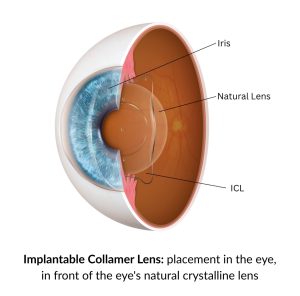
Because the cornea is not reshaped or removed, ICL is often considered for patients who are not suitable candidates for laser-based vision correction. Once implanted, the lens is invisible, remains securely in place, and does not require daily maintenance like contact lenses.
How does an ICL work?
ICLs are a technologically advanced alternative to glasses and regular contact lenses.
Instead of sitting on the surface of the eye, the lens works from inside the eye, providing stable and consistent vision correction.
- The lens is made from biocompatible collamer, a soft material designed to be well tolerated by the eye.
- It is placed between the iris and the natural lens, where it functions like a contact lens inside the eye rather than on the eye’s surface.
- Once implanted, the lens is invisible and not felt, and can be removed if medically necessary.
- The procedure is performed as a day surgery, taking approximately 10 to 15 minutes per eye.
- If cataracts develop later in life, the implanted lens can be removed at the time of cataract surgery and replaced with an intraocular lens instead.
Benefits of ICL Surgery
ICL improves how light is focused inside the eye through an implanted lens, without altering the cornea. For suitable patients, it can reduce reliance on glasses or contact lenses while offering several clinical and lifestyle advantages, including:
- Improved visual clarity: Enchances the eye’s focusing ability for clearer vision without glasses or contact lenses.
- Preservation of the eye’s natural corneal structure: Corrects vision by adding a lens inside the eye, without reshaping or removing corneal tissue.
- Option for reversibility: The lens can be removed or replaced if clinically needed in the future.
- Suitability for thin or abnormal corneas: Often considered when laser vision correction may not be recommended due to corneal thickness limitations, or if there is underlying keratoconus.
- Suitability for high myopia and astigmatism: Can correct high refractive errors, including myopia between -0.50D to -20.00D, hyperopia between +0.50D to +10.0D, and astigmatism between 0.50D to 6.00D.
- Supporting night vision quality: Many patients report good night vision, with a lower incidence of halos and starbursts compared with some high-myopia laser vision correction patients.
- UV protection: Collamer ICL lenses have UV-protective properties to help protect eyes from harmful ultraviolet rays.
- Relatively quick visual recovery: Many patients notice vision improvement soon after the procedure, with follow-up care to monitor recovery.
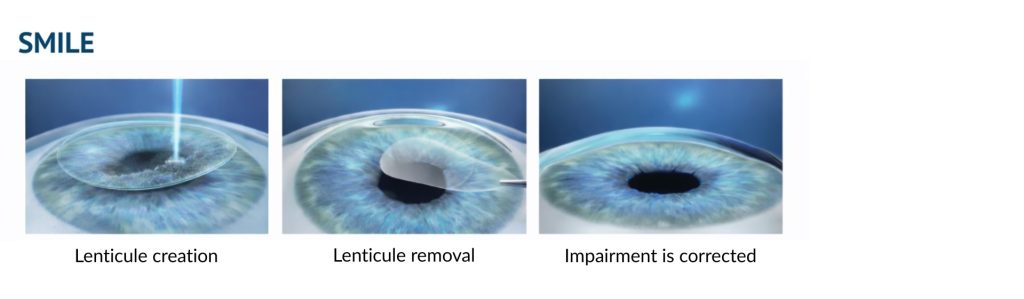
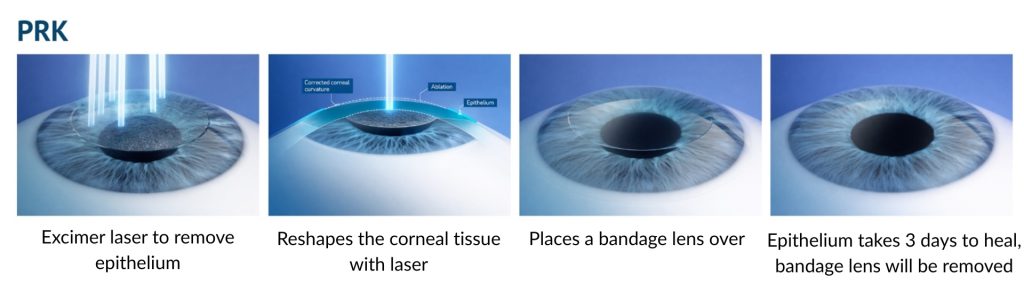
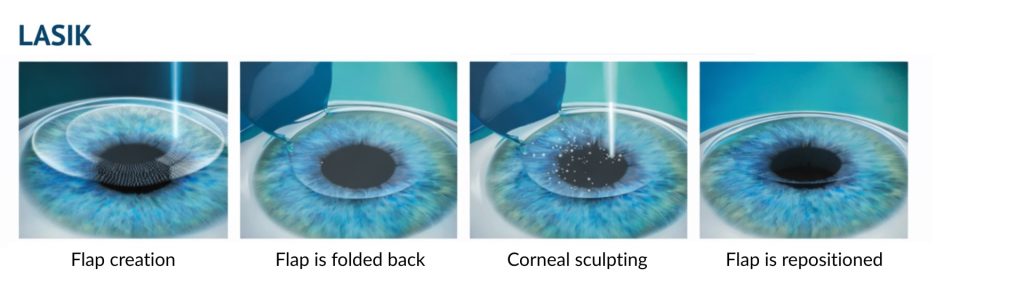
ICL vs LASIK vs SMILE – A Simple Comparison
| Feature | ICL | LASIK | SMILE |
|---|---|---|---|
| How it works | Adds a lens inside the eye | Reshapes the cornea with laser | Removes a small corneal tissue piece |
| Cornea altered? | No | Yes | Yes |
| Reversible? | Yes | No | No |
| Suitable for high myopia | Yes | Limited | Limited |
| Suitable for thin corneas | Yes | Often not suitable | Often not suitable |
| Dry eye risk | Lower | Higher | Moderate |
| Recovery time | Usually a few days | 1–2 days | 1–2 days |
| Long-term flexibility | Can be removed or exchanged | Permanent | Permanent |
| Visian ICL | LASIK | PRK | ||
| Vision Quality | Sharp and Clear Vision | Yes | Yes | Yes |
| 20-30 Minute Outpatient Procedure | Yes | Yes | Yes | |
| Removes Corneal Tissue | No | Yes | Yes | |
| Contributes to “Dry Eye” | No, does not induce dry eye syndrome | Occasional, up to 20% may experience dry eye | Occasional | |
| Safety Features | Removable or Reversible | Yes, removable | No, not reversible | No, not reversible |
| Flexibility for Future Procedures | Yes, removable | Limited if additional corneal treatment required | Limited if additional corneal treatment required | |
| Treats thin corneas | Yes | Limited | Limited | |
| UV Protection | Yes | No | No | |
| Biocompatible Lens | Yes | NA; laser based | NA; laser based | |
| Long Term History | Yes | Yes | Yes | |
Am I Suitable for ICL?
ICL is suitable for many individuals, including those with very high prescriptions where laser eye surgery may not be appropriate because too much corneal tissue would need to be treated. High prescriptions often mean thicker lenses and heavier glasses, and for some people, contact lenses may not be a practical option.
ICL is also commonly considered for individuals with severe dry eyes, as it does not reshape the cornea and is generally not associated with worsening dry eye in the way some corneal laser procedures can be.
In general, ICL is suitable for individuals with the following profiles:
- Age: 21–60 years
- Short-sightedness (myopia): mild to severe (approximately -0.50D to -20.0D)
- Astigmatism: approximately 0.50D to 6.00D
- Long-sightedness (hyperopia): mild to severe (approximately +0.50D to +10.00D)
ICL may be suitable for individuals who:
Want clearer vision, especially at night or in low-light conditions, with less glare or halo effects. These visual disturbances are sometimes more noticeable after laser vision correction than after ICL.
Prefer not to permanently reshape or thin the cornea with laser procedures. Keeping the cornea unchanged may also preserve more options for certain lens implants if cataract surgery is needed later in life.
ICL may not be suitable for individuals who have:
A narrow drainage angle in the eye, which can increase the risk of high eye pressure after ICL implantation
Poor corneal health
Glaucoma or already elevated eye pressure
Eye inflammation, such as uveitis
Early cataracts, where cataract surgery would be a more appropriate treatment
Macular or retinal conditions that could limit the improvement in vision
ICLs are potentially unsuitable for individuals who prefer not to have an intraocular procedure for vision correction, or for individuals with difficulties with yearly follow-up visits to monitor eye and corneal health, eye pressure, and the ICL positioning in the eye to ensure safety.
Your final suitability still depends on a comprehensive eye assessment. At Ascend Eye Clinic, we will evaluate your eye health carefully, discuss with you your preferences regarding intraocular surgery versus laser vision correction (i.e. LASIK, SMILE or TransPRK), and discuss with you the most appropriate options.
Pre-Operative Assessment for ICL
Before ICL surgery, a comprehensive eye assessment is performed to determine suitability and guide accurate lens selection. This evaluation typically includes:
- Measurement of corneal health, thickness, and curvature
- Assessment of anterior chamber depth
- Eye pressure checks
- Retinal examination
- Confirmation of prescription stability
These detailed measurements help ensure proper lens sizing and safe placement, supporting optimal visual outcomes and safety.

Final suitability is dependent upon a comprehensive eye assessment. At Ascend Eye Clinic, we will evaluate your eye health and parameters carefully and advise on the most appropriate vision correction option, whether ICL or any form of laser corneal surgery.

TransPRK
Pros
- No flap and no incision are made
- Suitable for patients with thinner corneas or irregular eye surfaces
- Avoids flap-related considerations entirely
Cons
- Vision improves more gradually over days to weeks
- Discomfort is more noticeable during the first few days of healing
- Requires closer follow-up early on while the eye surface heals
"The ICL procedure offers a true vision correction option for individuals seeking vision correction, but who would otherwise not qualify for laser corneal surgery. The current technology of ICLs support an effective, reversible, and stable approach to vision correction for such individuals."
— Dr Errol Chan —
Medical Director & Senior Consultant Ophthalmologist
Ascend Eye Clinic, Singapore
What Can I Expect During ICL Surgery?
ICL surgery is performed as a day procedure under local anaesthetic with or without sedation, so you can return to your accommodation on the same day. The procedure for both eyes takes a total of 20–25 minutes, and in some cases, it may be completed in as quickly as 10–20 minutes.
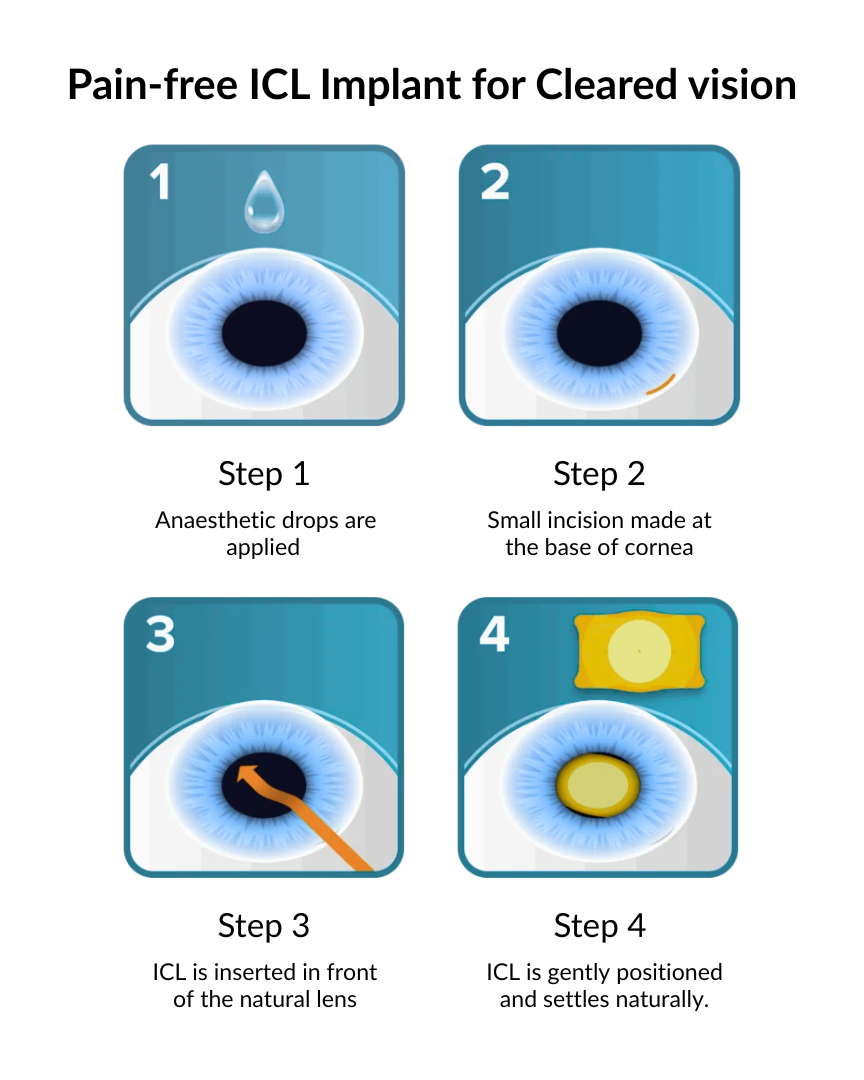
During the procedure, the surgeon creates a small micro-incision (about 2–3 mm) in the cornea, then inserts the ICL in a folded form into the eye. Once inside, the lens gently unfolds and is positioned carefully between the iris and your natural crystalline lens. Unlike many laser vision correction procedures, ICL does not remove corneal tissue, which helps preserve the cornea’s natural structure and may keep future corneal treatment options open if needed.
The ICL design has continued to be refined since it was first introduced in the 1990s, and globally more than 3,000,000 ICL lens implants have been performed to date. Many patients are able to resume daily activities within a few days, depending on individual recovery and the surgeon’s advice.

Recovery and Aftercare
After your ICL procedure, proper aftercare helps your eyes heal comfortably and supports a smooth recovery. Use the timeline below as a simple guide on what you can generally do and what to avoid at each stage. However, your aftercare schedule may be adjusted depending on your individual recovery.
ICL Surgery Aftercare
Rest your eyes, limit screen time, avoid reading.
Can resume driving or work once your vision is stable.
Light exercise but avoid heavy lifting. You may take a flight with your surgeon’s clearance.
You may use eye make-up, taking care not to get irritation.
Avoid direct tap water contact with the eyes.
Wear eye shields at night to prevent accidental rubbing.
Full exercise is possible.
Avoid swimming & sauna.
What ICL Does Not Correct
While ICL effectively corrects refractive errors such as myopia, astigmatism, and selected cases of hyperopia, it does not prevent age-related reading difficulty (presbyopia). Some patients may still require reading glasses later in life.
ICL also does not stop natural changes in eyesight over time, which is why stable prescriptions and regular follow-up are important for long-term visual care.
Potential Risk & Considerations
Long-Term Care After ICL
Regular eye reviews are recommended after ICL surgery to monitor lens position, eye pressure, corneal and overall eye health. Ongoing follow-up supports stable vision and long-term safety of the ICL implant in your eyes.
About Dr Errol Chan
Dr Errol Chan is the Medical Director and Senior Consultant Ophthalmologist at Ascend Eye Clinic in Singapore. With more than 18 years of clinical and surgical experience and over 10,000 eye procedures performed, he provides comprehensive care for patients seeking treatment for a broad range of complex and routine eye conditions, including performing refractive surgery for patients who desire freedom from glasses.
Dr Chan performs the full spectrum of refractive procedures, including laser vision correction through LASIK, transPRK, SMILE, and implantable collamer lens (ICL), to help patients achieve their visual and lifestyle goals.
Dr Chan received his medical degree (MBBS) from the National University of Singapore and completed Ophthalmology specialist training at the National University Hospital in Singapore. He has also achieved Ophthalmology specialist accreditations at the Royal Colleges in Edinburgh, Glasgow, London, and Canada, and the Academy of Medicine, Singapore.
Dr Chan received international fellowship training at the world-renowned McGill University in Canada, and at Moorfields Eye Hospital London in the UK. Additionally, he has furthered his interests in refractive surgery at Optegra Eye Hospital London, UK.
He is an international speaker, has published more than 40 articles in international peer-reviewed journals, won several international awards, and is an active clinical investigator in clinical trials investigating new treatments for eye diseases.
In his clinical refractive surgery practice, Dr Chan focuses on precision, efficacy, safety, and patient-centred care, adopting a detailed approach from the very first consultation, during surgery, and in follow-up care. Understanding that seeking treatment can be stressful, he affords sufficient time for every patient to understand their aspirations for their vision and their preferences regarding treatment.
Dr Chan regularly treats international patients, including those from Indonesia, who seek evaluation and treatment for reading vision problems in Singapore. Consultations and treatment options are clearly explained, with Bahasa Indonesia support available to help patients understand suitability, expectations, and long-term visual planning.
Frequently Asked Questions (FAQs)
1. What are key facts about ICL?
The ICL procedure involves implantation of a biocompatible lens implant within the eye, without reshaping the cornea.
2. What are the main benefits of ICL?
ICL is often considered for patients with high prescriptions, thin corneas, or dry eyes, and for those who are not suitable for laser vision correction.
3. Am I suitable for the ICL procedure?
The majority of patients with myopia and astigmatism refractive errors are eligible for ICL! General guidelines for suitability include:
- Between 21 and 45 years old
- Have myopia (nearsighted), with or without astigmatism
- Wish to reduce reliance on glasses or contact lenses
- Stable eye prescriptions for at least 12 months
- Not pregnant or nursing at the time of assessment
- Do not have history of prior eye surgery or certain eye or medical conditions
4. Is the EVO ICL procedure painful?
Before the procedure begins, numbing eye drops are used to ensure the eye remains comfortable. Most patients do not feel pain, although a slight feeling of pressure may be noticed.
5. Is EVO ICL better than other types of laser vision correction?
EVO ICL may be recommended for certain patients, particularly those with higher refractive errors. The most suitable procedure will depend on your eye health and vision needs, which your eye specialist will assess.
6. Will I still need reading glasses after ICL?
If you were to have had your ICL surgery done in your 20s or 30s, you would have been corrected for distance clarity. Therefore, once you reach your 40s or 50s, you will start to experience some age-related reading difficulty (presbyopia). Individuals would still require reading glasses later in life, usually from their mid-40s onwards. However, there is the option of surgically replacing your current ICL in one eye, with an ICL of a slightly high prescription, such that the eye can be corrected for near, allowing you to be able to read without glasses.
7. Can I feel the lens inside my eye?
No. The ICL sits behind the iris and cannot be seen or felt once implanted.
8. Will my degree come back after ICL?
ICL corrects your existing prescription, but it does not stop natural changes in eyesight over time. Stable prescriptions before surgery help reduce the chance of future changes.
9. Is ICL surgery permanent?
ICL is designed as a long-term vision correction solution. Once implanted, the lens can remain in the eye indefinitely and does not degrade over time. However, unlike laser vision correction, ICL is reversible. If your eye condition changes in the future — for example, due to cataract development, prescription changes, or other clinical reasons — the lens can be safely removed or exchanged by your surgeon.
10. How long does the procedure take?
The procedure for both eyes typically requires around 20-25 minute, and is done as a day procedure.
11. How many days should I plan to stay in Singapore for ICL surgery?
Most patients should plan for 3–5 days, which allows time for consultation, surgery, and at least one post-operative review before returning home. Your duration of stay may vary, depending on the progress of your recovery and your individual eye situation.
12. Is Indonesian patient assistance available?
Yes. Indonesian patient assistance is available, including support in Bahasa Indonesia for appointments and coordination.
13. How do I book a consultation?
You can book by contacting the patient assist team via WhatsApp, who will help arrange your consultation visit.
To learn more or schedule your consultation, contact our Indonesia office via WhatsApp. We’re here to help you.