


Ptosis, commonly known as droopy eyelids, is more than a cosmetic issue. When the upper eyelid sits too low, it can interfere with vision, cause constant eye strain, and make daily activities more challenging. This condition is known as ptosis and with proper assessment, it can be effectively treated.
Understanding Droopy Eyelids (Ptosis)
Droopy eyelids or ptosis, occurs when the upper eyelid sits lower than normal due to weakness or stretching of the levator muscle, which is the primary muscle involved in lifting of the upper eyelid.
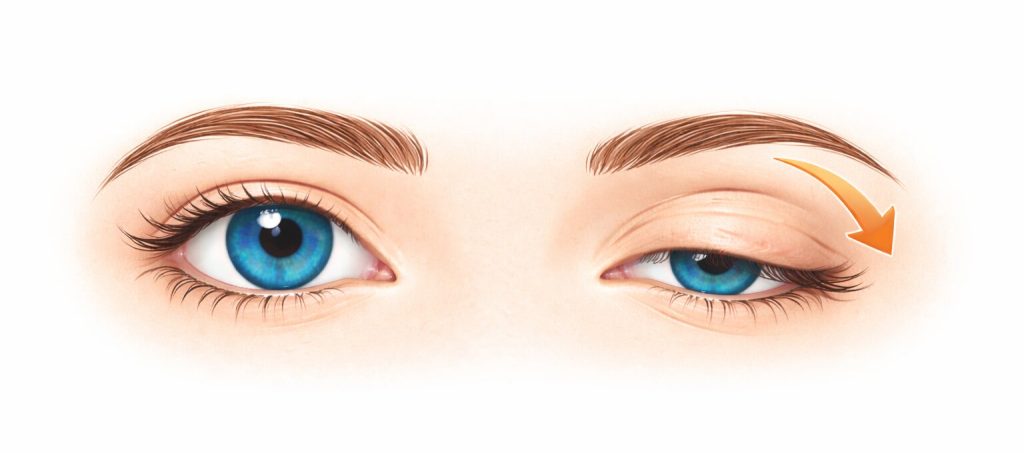
In its early stages, ptosis causes the eyes to look tired or uneven. As the condition progresses, the upper eyelids progressively cover the pupil, causing fluctuating clarity of vision and eye strain.
Patients with significant ptosis experience:
- Difficulty seeing clearly, especially upward
- Eye fatigue and headaches
- The need to raise the eyebrows or tilt the head back to see better
For this reason, droopy eyelids are not just a cosmetic concern. When the eyelid interferes with vision or daily activities, it becomes a functional eye condition that requires proper medical assessment and treatment.
Common Symptoms of Ptosis
- Eye fatigue
- Raised eyebrows
- Droopy upper eyelids
- Squinting or double vision
- Eyes appear unhappy or tired
- Head tilting with a slight chin-up posture
- Difficulty driving at night or reading small print
- Reduced vision due to obstruction of the line of sight
- Previous trauma, surgery or medical issues in eye area
- Dry eyes and excessive watering due to improper eyelid function
- Neck and back pain from adjusting head position to improve vision
- Headaches and migraines from strained forehead and eyebrow muscles
- Uneven or asymmetric appearance to the eyelids between the left and right
- Prominent forehead wrinkles as the forehead muscles work harder to lift the eyelids in compensation
Risk Factors for Ptosis
- Age: Older individuals are more prone to ptosis.
- Contact lens use: Frequent eye rubbing can contribute to aponeurotic ptosis.
- Eye surgery: Previous surgeries can increase the risk.
- Anti-wrinkle injections: Poorly administered anti-wrinkle treatments may migrate and cause eyelid droop.
Causes of Ptosis
Ptosis can develop for different reasons, and identifying the underlying cause helps guide proper treatment. For various types of ptosis conditions, the primary appearance can look very similar, with eyelid droopiness being the key feature. Therefore, a specific and detailed examination is important to look for other clinical signs to establish the underlying cause of the ptosis.
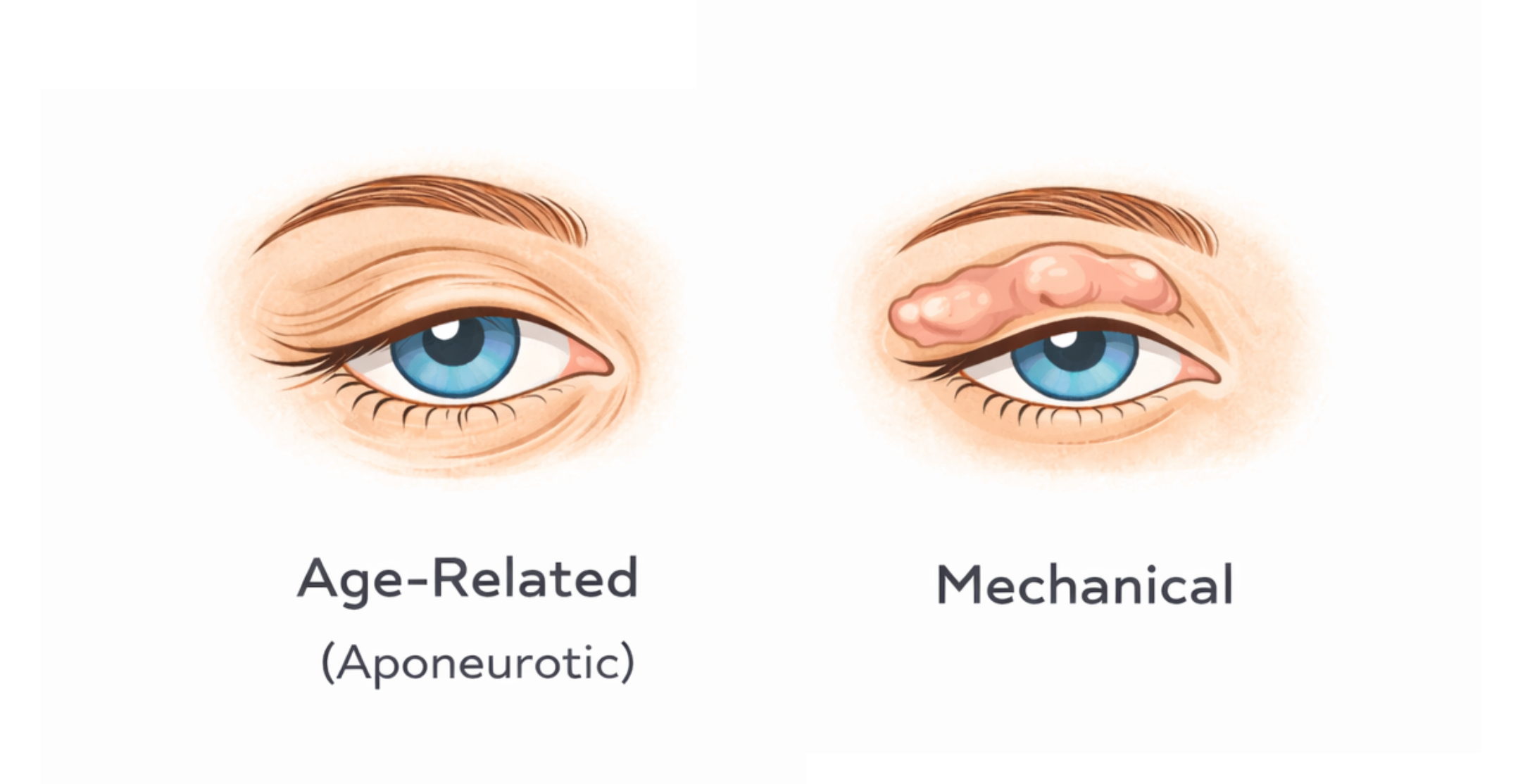
- Age-Related (Aponeurotic)
The most common type in adults. Over time, with aging, the tendon that connects the levator muscle to the eyelid stretches or weakens, causing the eyelid to droop gradually. - Congenital
Present from birth due to underdevelopment of the eyelid-lifting muscle. Early evaluation is important, especially if vision is affected during childhood. - Mechanical
Occurs when something physically weighs the eyelid down, such as long-standing swelling, scarring, or eyelid lumps. - Nerve-Related (Neurogenic)
Develops when the nerves controlling eyelid movement are affected by neurological conditions or injury. - Muscle-related (Myogenic)
Develops when the levator muscle itself is diseased by an underlying muscle disorder. - Trauma
The ptosis here may involve a combination of mechanical, nerve or muscle-related elements.
Not all ptosis cases require surgery. The decision depends on how much the eyelid droops and whether vision or daily function is affected.
Why Ptosis Should not be Ignored
Depending on its severity, ptosis may have several practical and noticeable effects. Below are some of the most common ways they can impact daily life and visual function:
- Vision Interference
When the eyelid blocks part of the pupil, patients may experience:- Reduced upper field of vision
- Difficulty reading or driving
- Eye fatigue from constantly trying to open the eyes wider
Some patients unconsciously raise their eyebrows or tilt their head back just to see clearly, which can lead to headaches and neck discomfort over time.
Eye Strain and Discomfort
Ptosis can make the eyes feel heavy, tired, or uncomfortable, especially after long periods of screen use or reading.Appearance and Confidence
Ptosis often makes the eyes look tired, uneven, or older than they actually are. For many patients, this affects self-confidence and how they feel in social or professional settings.- Lazy eye (Amblyopia)
In congenital ptosis in children, there is a danger that the developing paediatric eye may not receive sufficient visual input, because of obstruction of vision by the droopy eyelid. If sufficiently prolonged, this would lead to suboptimal visual development, a condition commonly termed as “lazy eye”. If a child develops a lazy eye, then the final visual acuity will be permanently limited for the child in his or her later years and in adulthood. This level of vision cannot be further improved even with spectacle correction. The prevention of lazy eye in congenital ptosis is time-sensitive, and there is a window period in which the ptosis needs to be addressed, in order to prevent this complication.
How Ptosis is Assessed & Diagnosed
Accurate diagnosis for ptosis is important prior to planning any treatment plan. Ptosis is assessed not based on the eyelid appearance alone, but requires a comprehensive, structured and meticulous eye and neurological examination to determine the severity and type of the ptosis and its underlying cause.
In a clinical ptosis evaluation, we will assess the following features:
- Eyelid height and symmetry, to determine the extent of droopiness, and whether one or both eyes are affected.
- Function of the levator muscle, which helps identify whether the muscle has weakened, stretched, or has partial or complete loss of its normal movement.
- Eye movement and visual function, to ensure that eye coordination and vision are not impacted, which may signify underlying neurological conditions.
- Fluctuations in the extent of ptosis with fatigue, as worsening of droopiness with prolonged eye use or towards the end of the day may signify an underlying muscle weakness disorder.
These findings help distinguish aponeurotic ptosis from neurological or myogenic ptosis, and helps guide the overall management plan.
A precise diagnosis ensures that appropriate treatment is prescribed. Where the underlying cause is neurological or muscular in origin, assessment and treatment of the underlying nerve or muscle disorder is required.
If the underlying cause is age-related (aponeurotic) or congenital in origin, then treatment of the ptosis is primarily ptosis correction surgery.

“The treatment of ptosis requires a balance of functional correction and aesthetic consideration. Thoughtful assessment and precise surgical planning help restore eye comfort, vision, and natural appearance.”
— Dr Errol Chan —
Medical Director & Senior Consultant Ophthalmologist
Ascend Eye Clinic, Singapore
Treatment for Age-Related Ptosis
Age-related ptosis is the most common cause of droopy eyelids. The appropriate treatment for aponeurotic ptosis depends on the severity and its impact on vision. Not all cases require surgery, and proper assessment is essential to determine the optimal surgical approach and technique.
- Non-Surgical Management
In mild cases where the eyelid droop does not interfere with vision, treatment involves regular monitoring. Managing underlying conditions, such as eye fatigue or inflammation, help prevent further worsening, but these measures do not correct the eyelid position itself.
If the ptosis is mild to moderate, botulinum toxin or oxymetazoline eye drops can be useful to improve the eyelid droopiness.
Non-surgical options are generally limited and are not effective when droopy eyelids significantly affects vision or daily activities.
- Surgical Treatment
When the ptosis interferes sufficiently with vision, causing persistent eye strain, or affecting daily function, ptosis surgery is the definitive solution. Surgery directly addresses the underlying levator muscle degeneration, weakness or loss of function, restoring proper eyelid height and function.
Ptosis Surgery Procedure
Ptosis surgery is a specialised eyelid procedure designed to raise the upper eyelid to a more functional and natural position. The goal is to restore clear vision while maintaining normal eyelid movement and symmetry.
The surgery works by:
- Tightening, repositioning, or reinforcing the eyelid-lifting muscle
- Adjusting eyelid height with precision to avoid over-correction
- Preserving a natural eyelid contour and blink function
Unlike cosmetic eyelid surgery alone, ptosis surgery focuses primarily on restoring eyelid function, with aesthetic improvement occurring as a natural outcome.
Types of Ptosis Surgery for Age-related Ptosis
There are 3 main techniques of ptosis surgery.
- Levator Palpebrae Superioris Repair (Levator Advancement)
This procedure restores the connection between the levator muscle and the eyelid to improve eyelid height and function. It is the most common surgical treatment for age-related (aponeurotic) ptosis and helps restore a clearer visual field while maintaining natural eyelid movement. - Levator Resection
In this technique, a portion of the levator muscle is shortened to strengthen its lifting ability. It is typically used when additional eyelid elevation is needed. - Frontalis Suspension
This procedure connects the eyelid to the forehead (frontalis) muscle using a sling material. It allows the forehead muscle to help lift the eyelid and is usually reserved for cases where the levator muscle function is weak.
Benefits of Ptosis Surgery
Following ptosis surgery, patients can experience:
- Improved vision, particularly in the upper field
- Reduced eye strain and fatigue
- Relief from compensatory eyebrow lifting or head tilting
- A more alert and balanced appearance
- Greater comfort and confidence in daily activities
When performed by an experienced specialist, ptosis surgery offers reliable, long-term improvement in both function and quality of life.
Conginetal Ptosis
Congenital ptosis refers to drooping of the upper eyelid that is present from birth. It occurs due to abnormal development of the levator muscle, which is responsible for lifting the eyelid.
The condition may affect one eye (unilateral) or both eyes (bilateral) and, in some cases, may be associated with other eyelid or eye abnormalities.
When is Surgery Recommended?
Not all cases of congenital ptosis require immediate surgery. The decision to proceed with surgery depends largely on the severity of eyelid drooping and its effect on vision.
In mild cases where vision is not affected, careful monitoring may be sufficient. Surgery may be delayed until the child is older and better able to tolerate the procedure.
However, early surgical treatment may be recommended if:
- The eyelid blocks the visual axis
- There is a risk of amblyopia (lazy eye)
- The child adopts an abnormal chin-up head posture to see beneath the eyelid
Early intervention in these situations helps support proper visual development.
Considerations for Surgery for Congenital Ptosis
Several factors are considered when deciding the most appropriate surgical approach.
- Levator Muscle Function
The strength of the levator muscle plays an important role in determining the surgical technique. Different procedures are used depending on whether the muscle function is strong, moderate, or weak. - Severity of Eyelid Drooping
More significant ptosis may require earlier surgical correction to prevent long-term vision problems. - Visual Development
Protecting the child’s visual development is the primary goal of treatment. Surgery may be recommended earlier when there is a risk of amblyopia. - Postoperative Eyelid Closure
Following surgery, some patients may not be able to close the eyelid completely during sleep. Lubricating eye drops or gel may be recommended to protect the eye while the eyelid adapts.
How the Procedure is Performed
Assessment and Surgical Planning
At Ascend Eye Clinic, Dr Errol Chan carefully evaluates the following before surgery:
- The degree of eyelid drooping
- Eyelid muscle strength and response
- Whether one or both eyelids require correction
This planning phase is critical, as even small differences in eyelid height can affect symmetry and comfort.
The Surgical Procedure
- Ptosis surgery is typically performed under local anaesthesia, sometimes with light sedation
- A small incision is made along the natural eyelid crease to minimise visible scarring
- The eyelid-lifting muscle is adjusted to achieve the correct eyelid position
Because the eyelid is a delicate and highly functional structure, the procedure requires precision and experience.
Post-Operative Follow-Up
Follow-up visits allow Dr Chan to monitor healing and ensure the eyelid settles into the intended position. This step is essential for achieving stable and lasting results.
Recovery & Aftercare
Recovery after ptosis surgery is usually straightforward, but proper aftercare is essential to support healing and achieve a stable eyelid position.
In the days and weeks following surgery, temporary swelling, bruising, and mild discomfort are common. Following the prescribed instructions closely helps reduce complications, promotes smoother healing, and ensures the eyelid settles into its intended position.
Ptosis Surgery Aftercare
Use this timeline as a quick guide to know what to do, and what to avoid, as your eyes heal.
Regular cold compresses to reduce eyelid swelling, take your prescribed medications to optimise healing.
Clean the eyelids as instructed to promote optimal healing.
Sutures will be removed, and you may fly after.
Avoid makeup, keep your head elevated while sleeping to support healing, avoid strenuous exercise and dust/smoke/wind exposure.
Wear sunglasses for UV protection, and do not rub your eyes.
Most swelling has resolved, can resume exercise, easing into it gradually, can resume regular office work.
Limit exposure to dust, smoke and wind.
Final results can be achieved, touch-ups may be required for over- or under-correction
About Dr Errol Chan
Dr Errol Chan is the Medical Director and Senior Consultant Ophthalmologist at Ascend Eye Clinic Singapore, with a subspecialty focus in medical and surgical retinal diseases. With more than 18 years of clinical and surgical experience and over 10,000 eye procedures performed, he provides specialised care for patients with complex and chronic eye conditions. He obtained his medical degree (MBBS) from the National University of Singapore and completed ophthalmology specialist training at the National University Hospital, Singapore. He has also achieved Ophthalmology specialist accreditations at the Royal Colleges in Edinburgh, Glasgow, London, and Canada, and the Academy of Medicine, Singapore.
Dr Chan has extensive experience in evaluating eyelid drooping caused by ageing, muscle weakness, nerve-related conditions, and contact lens–associated ptosis. His approach emphasises careful pre-operative assessment of eyelid position, muscle function, and facial symmetry to determine the most appropriate surgical plan for each individual.
In ptosis surgery, Dr Chan focuses on restoring eyelid height and contour while preserving natural appearance and eye comfort. He utilises refined microsurgical techniques tailored to the underlying cause of ptosis, aiming to improve visual field obstruction and achieve balanced, long-lasting results. Each treatment plan is guided by functional needs as well as aesthetic considerations, with close attention to post-operative recovery and patient satisfaction.
Dr Chan’s broader professional background includes advanced fellowship training at McGill University and Moorfields Eye Hospital, alongside more than 40 peer-reviewed publications, international conference presentations, and participation in clinical research. His work has been recognised with multiple international awards, reflecting his commitment to evidence-based care and continuous advancement in ophthalmic practice.
Frequently Asked Questions (FAQs)
1. What is ptosis and when does it require treatment?
Ptosis is drooping of the upper eyelid caused by weakness of the eyelid lifting muscle. Treatment is considered when the drooping affects vision, causes eye strain, or interferes with daily activities.
2. What is the difference between ptosis and age-related droopy eyelids?
Ptosis occurs when the levator muscle that lifts the eyelid becomes weak or detached, causing the eyelid margin to sit lower than normal. Age-related droopy eyelids are usually caused by loose or excess eyelid skin (dermatochalasis) rather than a muscle problem. Ptosis often requires specific eyelid muscle surgery to correct.
3. How can I tell if my droopy eyelids are affecting my vision?
4. Is ptosis surgery painful?
Ptosis surgery is performed under local anaesthesia and sedation, so pain is not felt during the procedure. Mild discomfort, swelling, or bruising may occur during recovery and typically settles over time.
5. What are the risks of ptosis surgery?
As with any surgery, ptosis correction carries some risks. These may include temporary asymmetry, under- or over-correction, dry eyes, infection, or scarring. Careful assessment and surgical planning help minimise these risks.
6. Will ptosis surgery improve vision as well as appearance?
7. Can children undergo ptosis surgery?
Yes. Children with congenital ptosis may require surgery if the eyelid drooping affects vision or increases the risk of amblyopia (lazy eye).
8. Will I need ptosis surgery again in the future?
Ptosis surgery generally provides long-lasting results. In some cases, particularly with age-related changes, a revision procedure may be considered later if the eyelid droops again.
9. How long does ptosis surgery take?
Ptosis surgery usually takes about 30–60 minutes per eye, depending on the technique used. It is commonly performed as a day procedure under local anaesthesia, sometimes with light sedation.
10. What is the recovery time after ptosis surgery?
Most patients can return to normal activities within about a week. Swelling and bruising may last one to two weeks, while the final eyelid position becomes clearer as healing progresses.
11. Will there be visible scars after ptosis surgery?
12. How long do I need to stay in Singapore for ptosis surgery?
13. Will I need to stay overnight in the hospital?
14. Are eye tests repeated in Singapore even if I have done them before?
15. When is it safe to travel back to Indonesia after surgery?
16. Is support available for Indonesian patients?
To learn more or schedule your consultation, contact our Indonesia office via WhatsApp. We’re here to help you.