
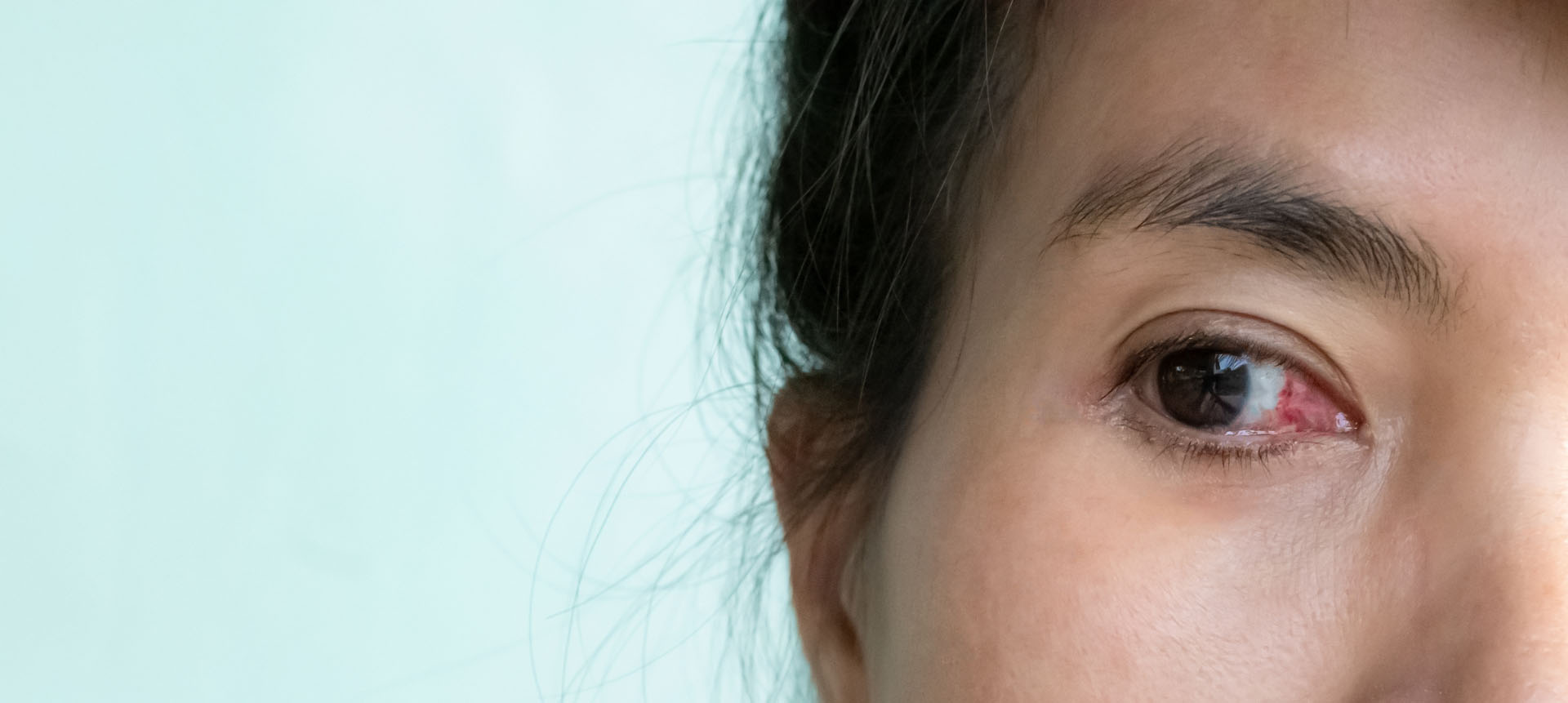
Pterygium, also known as surfer’s eye, is a benign growth that develops on the white of the eyeball, and gradually extends by growing onto the cornea. It is more commonly seen in people who spend prolonged time outdoors, especially in sunny, windy or dusty environments.
Although a pterygium is not cancerous, it can grow over time and affect eye comfort and appearance, and in some cases, vision. Early detection and timely management can help protect your eye health and reduce the risk of more chronic issues arising from the pterygium.
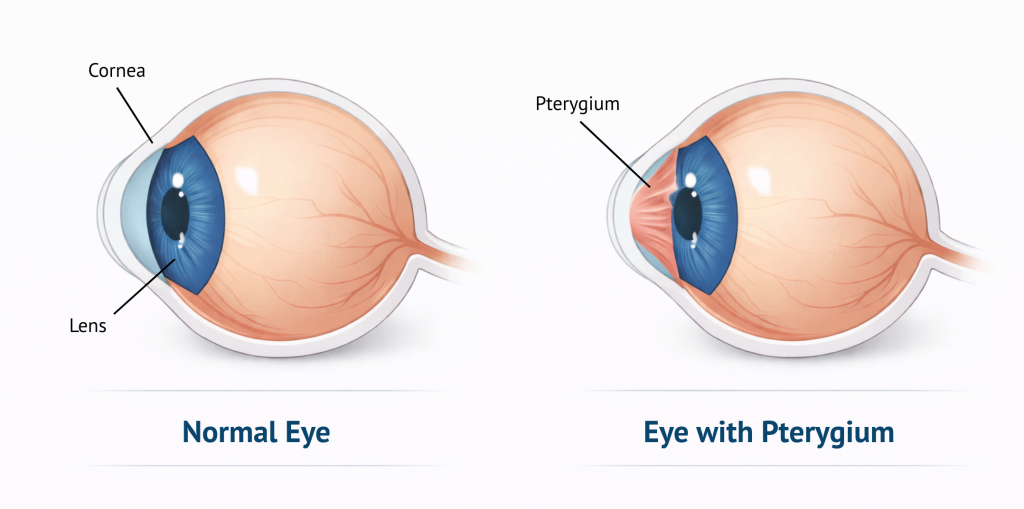
What Causes Pterygium?
Pterygium is strongly linked to long-term exposure to ultraviolet (UV) light. Other contributing environmental factors include:
- Frequent exposure to sunlight
- Wind and dust
- Dry or outdoor working conditions
These factors can irritate the surface of the eye and contribute to abnormal tissue growth. People who spend significant time outdoors without proper eye protection have a higher risk of developing pterygium.
What Symptoms Can a Pterygium Cause?
A pterygium causes:
- Persistent eye redness or irritation
- Dryness or a gritty sensation
- Increased tearing or sensitivity to light
- A visible growth on the white of the eye
- Blurred or distorted vision if it extends onto the cornea and increases corneal astigmatism
How Serious is a Pterygium?
Pterygium often starts subtly, with mild redness or irritation, and many people may not notice it at first. Over time, it gradually grows and begin to affect daily comfort, causing dryness, a gritty sensation, or frequent eye redness. Further growth causes it to become too large, extending onto the cornea, causing an increase in astigmatism and interfering with clear vision.
Early assessment helps detect changes sooner and allows timely care, supporting long-term eye comfort and visual quality so you can continue enjoying everyday activities with ease.
Treatment Options for Pterygium
The treatment for pterygium depends on the size of the growth and whether it affects eye comfort or vision. Your ophthalmologist will recommend the most appropriate approach based on how the condition progresses and its impact on your daily activities.
- Observation
Small, stable pterygia may be monitored with regular check-ups. Lubricating eye drops and eye ointments can help preserve a good tear film, relieving irritation but will not eradicate the growth. The use of sunglasses with appropriate UV protection is important to prevent the pterygium from developing further. - Medical Treatment
If the pterygium frequently develops recurrent episodes of inflammation and redness, topical steroid eyedrop medications are prescribed to reduce such occurrences. - Surgery
If the pterygium grows, causes persistent discomfort or eye redness, or affects vision, surgical removal of the pterygium is the definitive and standard of care treatment. The goal is to protect the cornea and restore the eye surface, and reduce the risk of longer-term vision problems.

“Effective pterygium treatment depends on meticulous surgical technique and proper tissue management. The use of a conjunctival graft is important to prevent recurrences. Careful removal and reconstruction help reduce recurrences while restoring ocular comfort and clarity.”
— Dr Errol Chan —
Medical Director & Senior Consultant Ophthalmologist
Ascend Eye Clinic, Singapore
Benefits of Pterygium Surgery
Pterygium surgery is performed to protect the eye surface and support visual comfort when the growth affects the cornea or causes ongoing irritation. The potential benefits of surgery include the following:
- Improved Vision
Surgery removes the growth that may be affecting the cornea or causing visual disturbance, supporting clearer and more stable vision in suitable cases. - Reduced Discomfort
Removing the pterygium can help relieve ongoing irritation, redness, or the uncomfortable (e.g. gritty or scratchy) sensation caused by the growth. - Lower Risk of Recurrence
Modern surgical techniques such as conjunctival autografting, uses healthy tissue from the eye to cover the treated area. This approach is widely used to help reduce the likelihood of the pterygium returning, although recurrence risk varies between individuals.
When a Pterygium becomes red and irritated, eye drops or ointments may be used to soothe the inflammation. But this will not halt the growth. When the Pterygium grows too large and begins to threaten sight, we would recommend having it surgically removed. As part of the procedure, a patch of translucent skin called the conjunctiva is used to patch over the site of removal. Chances of a Pterygium growing back after removal are low. Though uncommon, a Pterygium may return but this usually affects the younger generation who are constantly exposed to the sun’s UV rays.
What Does Pterygium Surgery Involve?
Pterygium surgery is performed as a day procedure under local anaesthesia, meaning that the eye is numbed and patients generally do not experience pain during surgery.
The procedure involves:
- Careful removal of the abnormal pterygium tissue from the cornea and the eye surface.
- Harvesting of a conjunctival autograft – a small rectangular piece of healthy membranous tissue covering the whites of the eye is harvested and then carefully placed over the area previously occupied by the pterygium to promote healing. The graft is secured in place with just biological glue, without sutures.
- Securing the graft – The graft is secured using surgical glue.
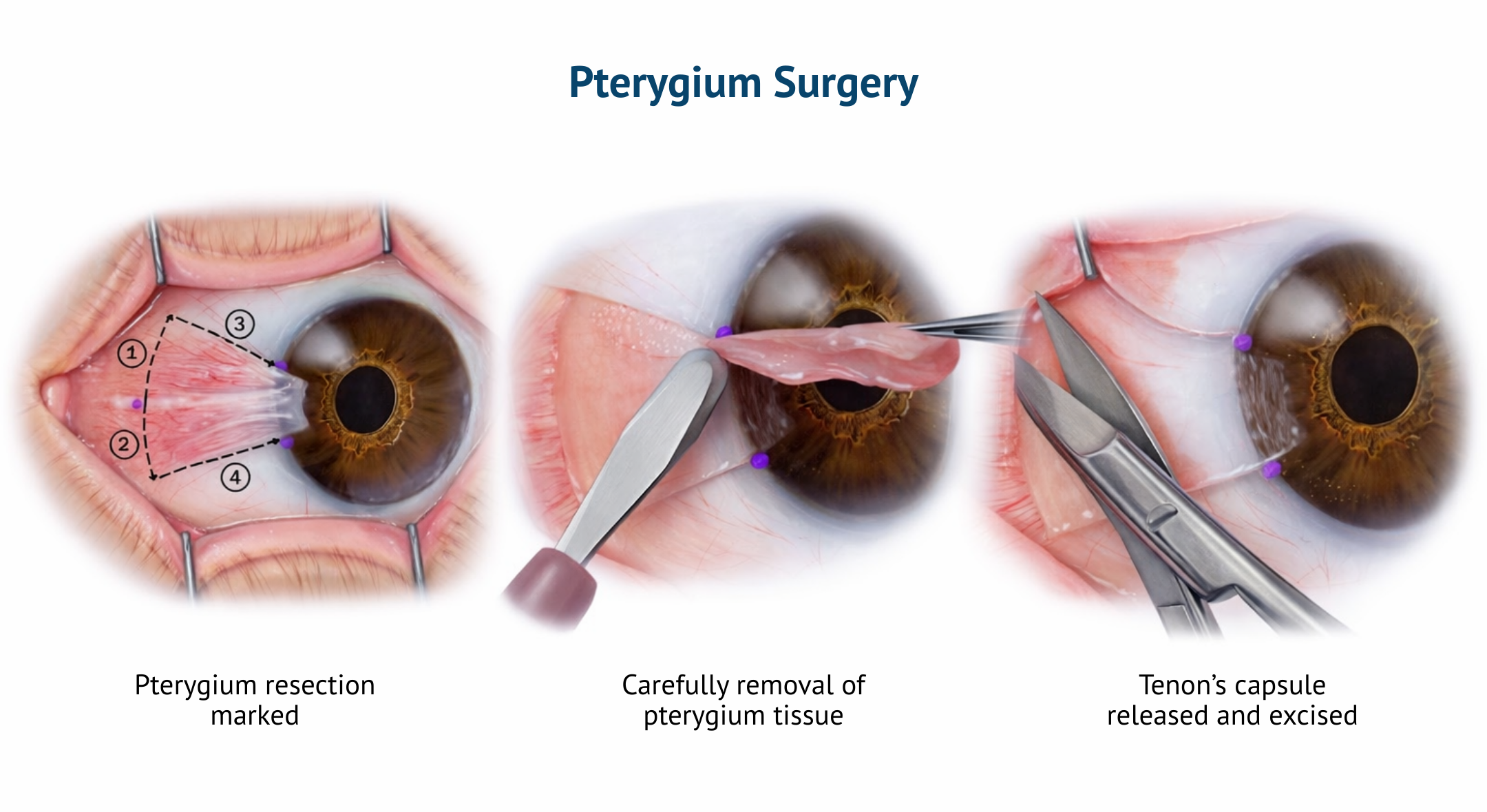
The use of a conjunctival autograft greatly reduces the likelihood of future recurrences of the pterygium.
The procedure requires microsurgical precision and specialised instruments because the eye surface is delicate. Surgery generally takes around 20-40 minutes, depending on the size, number and position of the pterygia. Patients generally do not feel pain during the procedure due to anaesthesia and the sedative given.
Recovery & Aftercare
In the recovery period, redness and a very slight gritty sensation are often experienced. These symptoms gradually improve within the first week, and eventually resolve. Eyedrop treatment is required for up to 4-6 weeks after pterygium surgery to aid in optimal healing.
Use this timeline as a general guide for what to do and what to avoid as your eye heals after pterygium surgery. At Ascend Eye Clinic, we will provide personalised advice based on your recovery.
Pterygium Surgery Aftercare
Wear your eye pad and eye shields, rest your eyes, limit screen time, avoid reading.
Can resume driving, phones or computer work once your eye feels more comfortable. Can remove eye pads.
Avoid light or heavy exercise or lifting. You may take a flight with your surgeon’s clearance. Wear eye shields at night to prevent accidental rubbing.
Can resume light exercise.
Use sunglasses to avoid excessive UV exposure. Avoid direct tap water contact with the eyes. Avoid using eye make-up and rubbing the eyes.
Can resume strenuous exercise.
Limit exposure to dust, smoke, sand, pollen and wind.
Can resume swimming and saunas, depending on the individual healing process.
About Dr Errol Chan
Dr Errol Chan is the Medical Director and Senior Consultant Ophthalmologist at Ascend Eye Clinic in Singapore. With more than 18 years of clinical and surgical experience and over 10,000 eye procedures performed, he provides comprehensive care for patients seeking treatment for a broad range of complex and routine eye conditions, including performing pterygium surgery.
In the area of pterygium management, Dr Chan has clinical expertise in managing routine and complex pterygium conditions, including recurrent pterygiums that have failed primary surgical treatment, multiple pterygia in one eye, complex pterygia, or in cases with challenges in graft harvesting. Dr Chan adopts a stitch-free technique in securing the graft, to promote better comfort and healing.
Dr Chan received his medical degree (MBBS) from the National University of Singapore and completed Ophthalmology specialist training at the National University Hospital in Singapore. He has also achieved Ophthalmology specialist accreditations at the Royal Colleges in Edinburgh, Glasgow, London, and Canada, and the Academy of Medicine, Singapore.
Dr Chan received international fellowship training at the world-renowned McGill University in Canada, and at Moorfields Eye Hospital London in the UK. He has furthered his interests in refractive surgery at Optegra Eye Hospital London, UK.
He is an international speaker, has published more than 40 articles in international peer-reviewed journals, won several international awards, and is an active clinical investigator in clinical trials investigating new treatments for eye diseases.
In his clinical practice, Dr Chan focuses on precision, efficacy, safety, and patient-centred care, adopting a detailed approach from the very first consultation, during surgery, and in follow-up care. Understanding that seeking treatment can be stressful, he affords sufficient time for every patient to understand their aspirations for their vision and their preferences regarding treatment.
Dr Chan regularly treats international patients, including those from Indonesia, who seek evaluation and treatment for reading vision problems in Singapore. Consultations and treatment options are clearly explained, with Bahasa Indonesia support available to help patients understand suitability, expectations, and long-term visual planning.
Frequently Asked Questions (FAQs)
1. Is pterygium surgery painful?
The procedure is performed under local anaesthesia, so you should not feel pain during surgery. Mild discomfort, redness, or a gritty sensation may occur during recovery and usually improves with prescribed eye drops and aftercare.
2. How long does the surgery take?
Pterygium surgery typically takes between 20 to 40 minutes, depending on the size and complexity of the pterygium growth.
3. Will I still need glasses after surgery?
4. Will the pterygium come back after surgery?
Modern surgical techniques, including conjunctival autografting, help reduce the risk of recurrence. However, pterygium can still return in some cases, especially with continued sun or environmental exposure. Regular follow-up and eye protection are important for long-term care.
5. Can I drive after the surgery?
Yes, you will be able to drive about 1-2 days after the surgery, depending on your recovery and comfort level. You will be seen in the clinic and be cleared before you can drive. On the day of the surgery, we recommend that you do not drive after your procedure and instead, come with someone who will be able to manage your transport arrangements.
6. What is the recovery time?
7. How can I manage post-surgery care?
We recommend that you use your prescribed eye drops and to avoid rubbing your eye. We also advise that you attend your follow-up visits, which are scheduled at about 1 day, 1-2 weeks, and about 4 weeks, post-procedure. Follow-up visits can be adjusted to suit your travel schedule.
8. When is it safe to fly back to Indonesia after surgery?
Patients can usually travel within 2 to 3 days after surgery, once the eye is more stable. At your consultation visits, we will advise you based on the progress of your recovery.
9. How to book a consultation?
10. Is Indonesian patient assistance available?
To learn more or schedule your consultation, contact our Indonesia office via WhatsApp. We’re here to help you.